
# Connection Isn’t Capacity
Farmer’s markets are a front porch, not the foundation of Food System 2.0.

A farmer’s market is not a food system.
It’s a tent.
And every time we confuse a tent for infrastructure, Admiral Ackbar is somewhere in the galaxy doing what he does best: warning us we’re walking into a trap.
I don’t mean that as a dunk on markets. I love farmers’ markets. They’re one of the last places where people remember food is grown by humans, in weather, under pressure, with real consequences. Markets build connection. Markets build culture.
But markets don’t move food.
Markets build culture. Systems move food.
A food system is what happens on Monday, Tuesday, and Wednesday. It’s what happens when the tents are gone, when the heat is up, when the fridge is low, when the school cafeteria still needs lunch, and when a household trying to eat well doesn’t have a “Saturday morning window” to make it happen.
I’m writing this because I keep hearing the same plan: ‘just expand the farmer’s markets.’ And I keep seeing the same outcome: burnout, volatility, and local food that never becomes normal.
Here’s the trap: everyone says they want more local farms… and then we build an economy where the only reliable channel we offer is weekends. We ask small farms to shoulder the entire supply chain, harvest, wash, pack, keep it cold, move it, market it, sell it, and then we call it “entrepreneurship” when they somehow survive.
That’s not a market.
That’s survival mode.
Local doesn’t fail on Saturday. Local fails on Tuesday.
Tuesday is when the walk-in cooler starts making that sound you never want to hear. Tuesday is when the delivery is due, and the route doesn’t exist unless the farmer becomes the delivery company. Tuesday is when compliance, wash/pack realities, temperature control, and delivery windows show up and remind you that “local” isn’t a belief. It’s logistics.
And logistics aren’t forgiving. If you lose temperature control, you can lose the product and your margin for the week.
This is the distinction I keep returning to in my Roadmap work, because it explains why local food often stays stuck as a lifestyle instead of becoming a baseline.
Connection is not capacity.
Farmers’ markets build connection. But capacity is actually shared cold storage. Capacity is wash/pack. Capacity is aggregation. Capacity is predictable distribution. Capacity is institutional purchasing that creates steady weekday demand, not a hopeful Saturday. Capacity is a system that lets a farmer farm instead of forcing them to become a tiny, exhausted version of Sysco.
And under all of it is the economic reality we avoid: local is forced to compete against a system that looks cheaper because it offloads costs. Industrial food doesn’t win because it’s magically more efficient. It wins because it can push the bill onto land, labor, public health, and the future, and still hand you a low number at checkout.
So when people ask why local costs more, the honest answer is simple: local is trying to pay the full cost in real time. The dominant system is not.
If you want local food to be normal (not a weekend hobby), you can’t stop at the market. Markets are a great front porch. But they can’t be the foundation.
Food System 2.0 is the foundation. And the foundation is boring on purpose: shared infrastructure, shared logistics, and buyers who show up on weekdays.
Here’s the test I’m using for every “support local” idea I hear:
What happens on Tuesday?
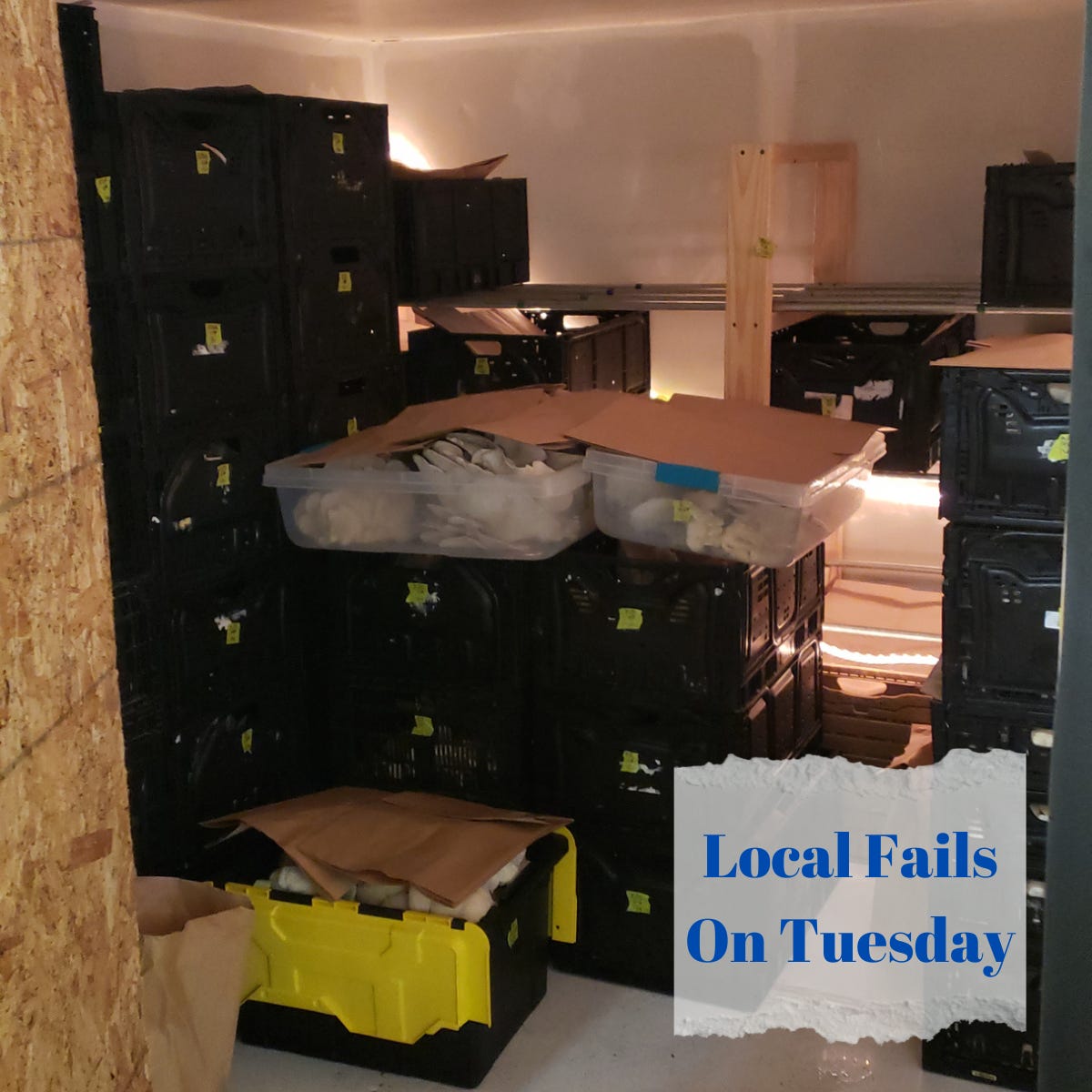
If the answer is “we’ll figure it out,” it’s not a system yet. It’s a sentiment.
Ackbar wasn’t warning us about farmers’ markets. He was warning us about confusing connection with capacity.
So let me ask you: if you could fund one boring-but-essential piece of local food infrastructure in your city, think cold storage, wash/pack, aggregation, delivery routes, institutional purchasing? What would you pick?
Doors to follow (if you want the deeper Roadmap):
Everyone wants more local farms… (markets aren’t a strategy)
No Cooler, No Car, No Chance (infrastructure bottleneck)
Engage the Community (how local becomes a movement)
Writing without a payway is important to me, but writing does take time. If this post was valuable to you in any way, I would be honored if you’d consider buying me a coffee to support what I am doing. It would make my day!
"Capacity is a system that lets a farmer farm instead of forcing them to become a tiny, exhausted version of Sysco." Classic line. It made me laugh and it's so true.